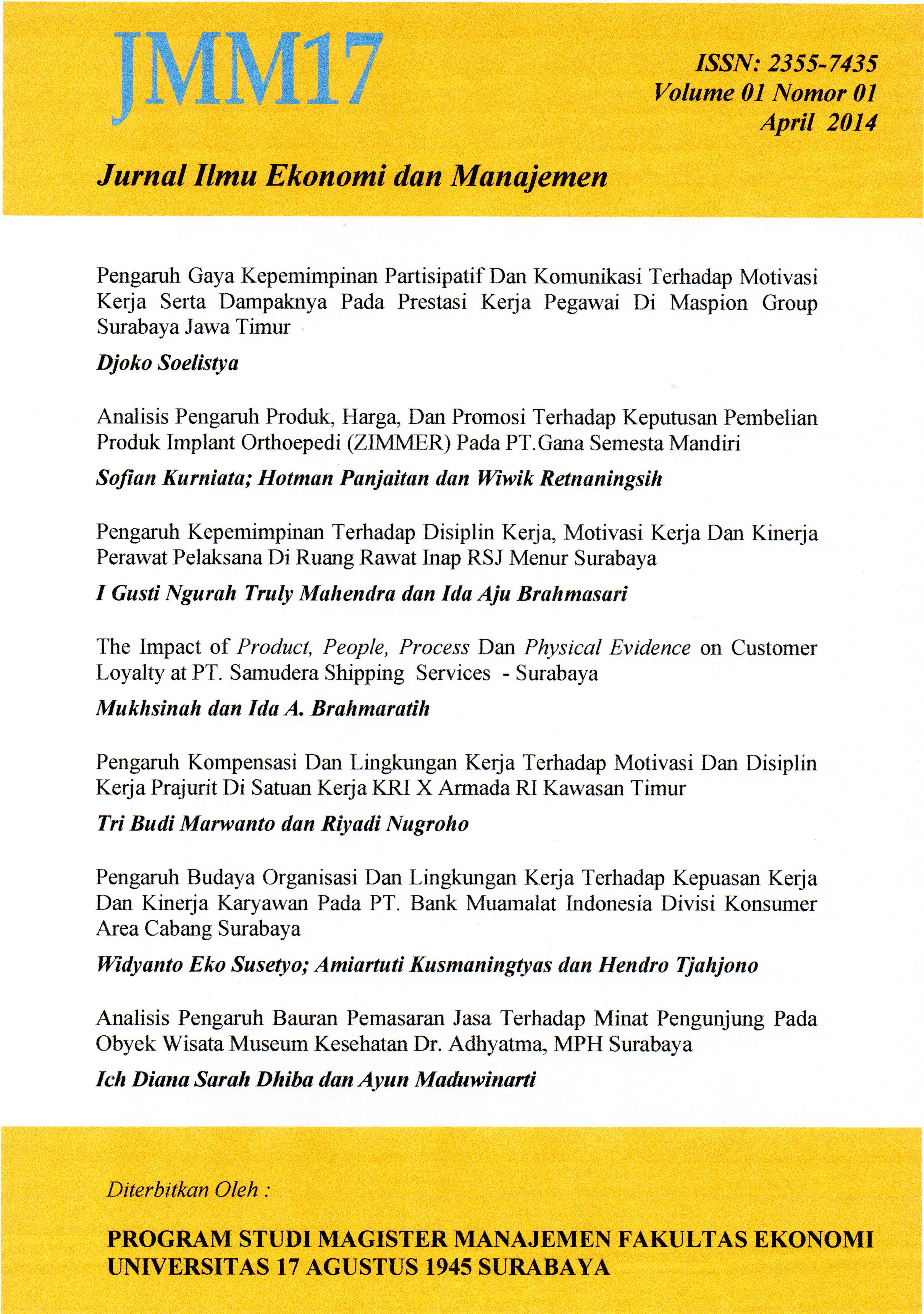
The Impact of Product, People, Process Dan Physical Evidence on Customer Loyalty at PT. Samudera Shipping Services - Surabaya
DOI:
https://doi.org/10.30996/jmm17.v1i01.312Abstract
This study aims to determine the effect of product, people, process and physical evidence on customer loyalty St PT. Samudera Shipping Services - Surabaya. The variables used in this study are the independent variable ( X ) consisting of the Product ( X1 ) , People ( X2 ) , Process ( X3 ) , and Physical Evidence and the dependent variable ( Y ) that is customer loyalty. The theory used is Kotler & Keller ( 2009 ) marketing mix refers to the concept of the traditional marketing mix consists of 4Ps , namely product , price , place / location and promotion expanded with the addition of non- traditional elements , namely people , physical facilities and processes to be seven elements (7P) . However, the study was taken 4 P, which are product, people, process and physical evidence. And the Sheth theory on Tjiptono (2012:482) customer loyalty is a deeply held commitment to re- buy or subscribe to a product / service consistently preferred in the future, giving rise to a series of purchase of the product or the same product over and over, despite situational influences and marketing efforts have the potential to cause switching behavior to similar competitors. This study of causal research is looking for a research and describe the relationship (cause and effect) and the effect of study variables to be concluded (Maholtra , 2005 , p.100 ) . The population that will be used and examined in this study are customers of PT. Samudera Shipping Services Branch Office Surabaya in 2011-2013. Data analysis techniques used in this research is to use the method of Structural Equation Modeling (SEM) with software Smart PLS (Partial Least Square). The study results showed that the product variable significant positive effect on loyalty , the value of t - statistic greater than 1.96 indicates that 3,020 . These results indicate that the first hypothesis , H1 : Product effect on loyalty , is accepted . For people variable has no effect on customer loyalty , the value of t - statistics that show less than 1.96 which is 1,163 . So the second hypothesis ( H2 ) "The effect on customer loyalty " , be rejected . Process Variables significant positive effect on customer loyalty , the value of t - statistic greater than 1.96 indicates that 2,420 . These results indicate that the third hypothesis ( H3 ) " Process effect on customer loyalty " stated diterima.Variabel physical evidence significant positive effect on customer loyalty , the value of t - statistic greater than 1.96 indicates that 5,335. These results indicate that the fourth hypothesis ( H4 ) " Physical evidence effect on customer loyalty " , is accepted.
Keyword : product, people, process ,physical evidence, customer loyaltyDownloads
References
Abdul Khakim, 2009, Dasar Dasar Hukum Ketenagakerjaan Indonesia, Aditya Bakti, Bandung.
___, 2003, Pengantar Hukum Ketenagaker-jaan Indonesia, CitraAditya Bakti, Ban-dung.
Bambang S. Widagdo Kusumo, 2006, Mengu-rai Benang Kusut Hukum Perburuhan dan Himpunan Peraturan Perundang-Undang-an Ketenagakerjaan, Annadia, Sidoarjo.
___, 2010, Hubungan Industrial Indonesia, MateriKuliah Magister Ilmu Hukum UNTAG
___, 2010, Filosofi Perlindungan Tenaga Kerja DanPermasalahannya Dalam Prak-tek, Makalah pada Seminar Hubungan Industrial di Inna Tretes Hotel, Pasuruan
___, 2005, Menyongsong Pelaksanaan UU No. 2 Tahun 2004,seminar sehari Ketena-gakerjaan, Surabaya
___, 2000, Peranan Serikat Pekerja dan Paradigma Baru Hubungan Industrial di Indonesia, Himpunan Pembina SDM Indo-nesia, Jakarta.
___, 2007, Dinamika Hak Mogok, Laros, Sidoarjo
Downloads
Published
How to Cite
Issue
Section
License
Authors who publish to JMM17: Jurnal Ilmu Ekonomi Dan Manajemen agree to the following terms:
- Authors transfer the copyright and grant the journal right of first publication with the work simultaneously licensed under a Creative Commons Attribution-ShareAlike 4.0 International License.. that allows others to share the work with an acknowledgement of the work's authorship and initial publication in this journal.
- Authors are able to enter into separate, additional contractual arrangements for the non-exclusive distribution of the journal's published version of the work (e.g., post it to an institutional repository or publish it in a book), with an acknowledgement of its initial publication in this journal.
- Authors are permitted and encouraged to post their work online (e.g., in institutional repositories or on their website) prior to and during the submission process, as it can lead to productive exchanges, as well as earlier and greater citation of published work (See The Effect of Open Access)