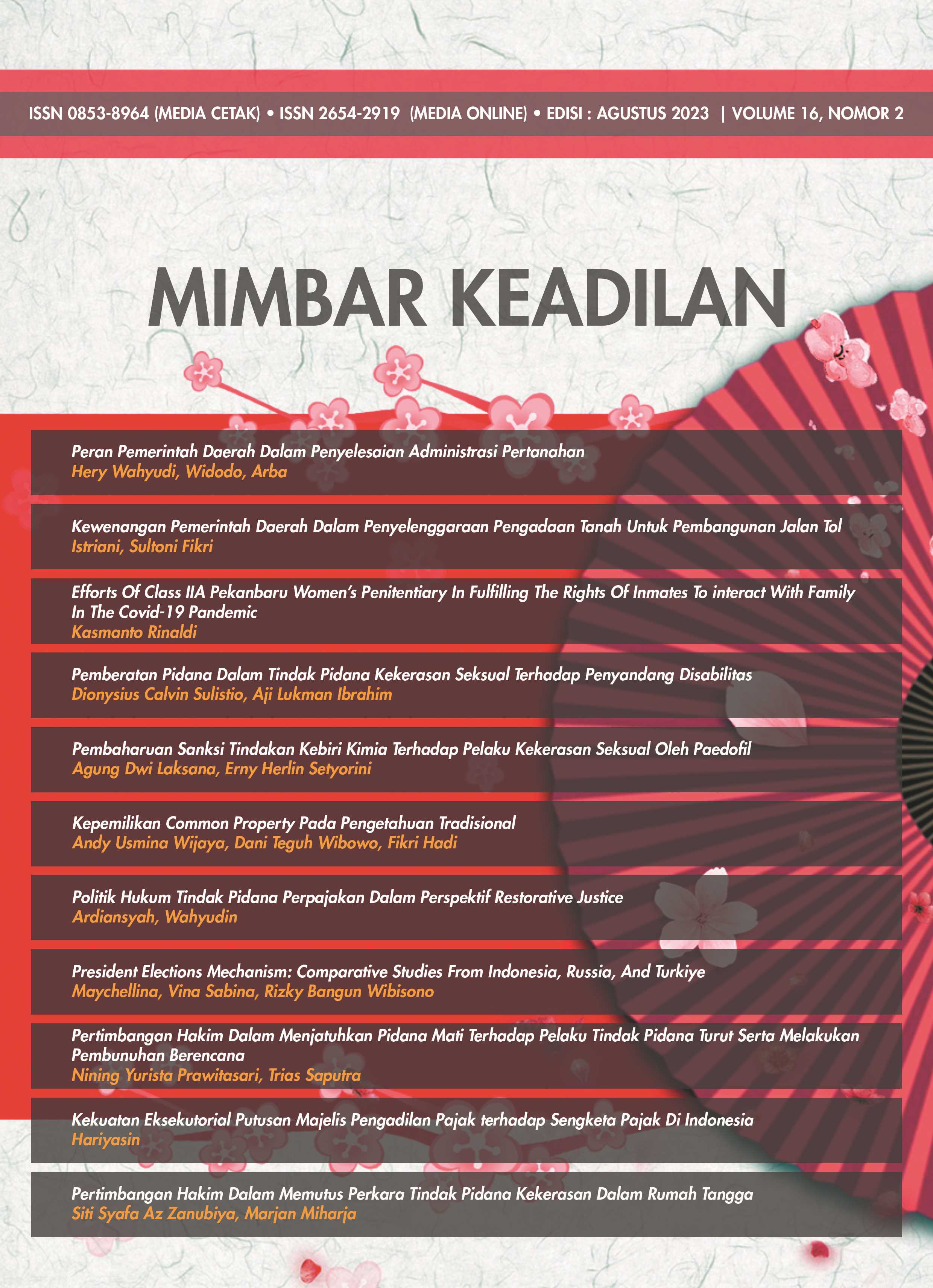
President Elections Mechanism: Comparative Studies from Indonesia, Russia, and Türkiye
DOI:
https://doi.org/10.30996/mk.v16i2.8767Keywords:
indonesia, president, russia, turkeyAbstract
This study aims to determine the differences and similarities in the presidential election system in 3 (three) countries, as an example we choose Indonesia, Russia, and Türkiye. This research focuses on how the presidential election system is implemented in the countries of Indonesia, Russia, and Türkiye as well as, what are the differences in the presidential election system used, the pattern of nominations, and the requirements for presidential nominations by the countries of Indonesia, Russia, and Türkiye. This study uses a normative juridical method with a statutory approach and a comparative approach based on the constitution of each country. The results of the study show that there are similarities and differences in the presidential elections in the three countries. First, the similarity of the three countries is implementing a plural or district system with the Two Round System variant. The winner of the election must get absolute or absolute votes. Second, the differences between the three countries in presidential elections such as nomination patterns, terms of office, presidential requirements, and thresholds. However, in analyzing this difference, there are only two countries that are the same: Indonesia and Türkiye, for the same presidential term. Then the nomination pattern in Russia and Türkiye is the same. Then, the age requirements for Indonesian and Türkiye presidential candidates are the same
Downloads
Downloads
Published
Issue
Section
License
Authors who publish with Mimbar Keadilan agree to the following terms:
- Authors transfer the copyright and grant the journal right of first publication with the work simultaneously licensed under a Creative Commons Attribution-ShareAlike 4.0 International License.. that allows others to share the work with an acknowledgement of the work's authorship and initial publication in this journal.
- Authors are able to enter into separate, additional contractual arrangements for the non-exclusive distribution of the journal's published version of the work (e.g., post it to an institutional repository or publish it in a book), with an acknowledgement of its initial publication in this journal.
- Authors are permitted and encouraged to post their work online (e.g., in institutional repositories or on their website) prior to and during the submission process, as it can lead to productive exchanges, as well as earlier and greater citation of published work (See The Effect of Open Access)