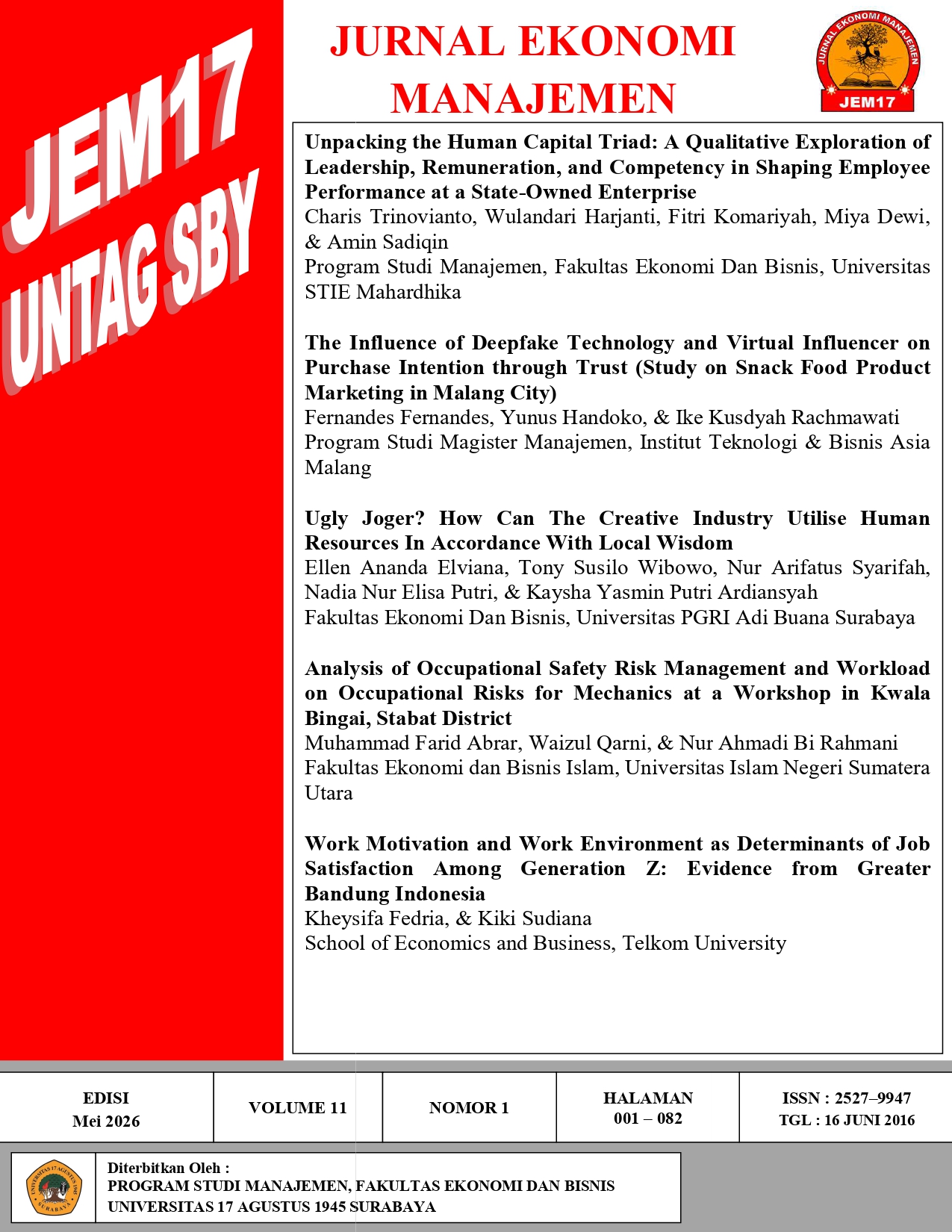
The Influence of Deepfake Technology and Virtual Influencer on Purchase Intention through Trust (Study on Snack Food Product Marketing in Malang City)
DOI:
https://doi.org/10.30996/jem17.v11i1.133625Abstract
The declining sales of snack food products in Malang City indicates a weakening of consumer purchase intention and a diminishing impact of traditional marketing techniques. Rapid advancements in digital technology have prompted businesses to integrate AI-driven innovations, such as deepfake technology and virtual influencers, to recapture consumer interest. Nevertheless, the implementation of these tools has sparked debates regarding the role of consumer trust in determining the success of digital marketing strategies on buying interest.
This research aims to evaluate the impact of deepfake technology and virtual personas on purchase intention, both directly and through trust as a mediating variable, specifically within the snack food sector in Malang City. Employing a quantitative approach through survey methods, data was collected from consumers who had been exposed to AI-based marketing content on social media.
The data analysis examined the intricate relationships between the research variables. The findings reveal that while both deepfake technology and virtual influencers positively affect consumer trust and purchase intention, trust itself was found to have no direct effect on buying interest. Furthermore, trust failed to act as a mediator between these AI technologies and the final purchase decision. These results suggest that consumer buying interest in Malang City is not primarily driven by deep-seated trust in the technology or digital figures. Instead, it is more heavily influenced by visual appeal, aesthetic elements, and current AI trends. Consequently, businesses should prioritize innovative and visually-oriented marketing strategies to effectively engage digital consumers.
Keywords: deepfake technology; virtual influencer; trust; purchase intention; snack food marketing
Downloads
Downloads
Published
Issue
Section
License
Copyright (c) 2026 Fernandes Fernandes, Yunus Handoko, Ike Kusdyah Rachmawati

This work is licensed under a Creative Commons Attribution 4.0 International License.
Authors whose manuscript is published will approve the following provisions:
- The right to publication of all journal material published on the JEM17: Jurnal Ekonomi Manajemen website is held by the editorial board with the author's knowledge (moral rights remain the property of the author).
- The formal legal provisions for access to digital articles of this electronic journal are subject to the terms of the Creative Commons Attribution-ShareAlike (CC BY-SA) license, which means JEM17: Jurnal Ekonomi Manajemen reserves the right to store, modify the format, administer in the database, maintain and publish articles without requesting permission from the Author as long as it keeps the Author's name as the owner of Copyright.
- Printed and electronically published manuscripts are open access for educational, research, and library purposes. In addition to these objectives, the editorial board shall not be liable for violations of copyright law.